In recirculating cooling systems, calcium carbonate scale reduces heat transfer and raises energy use. Causes and control methods.
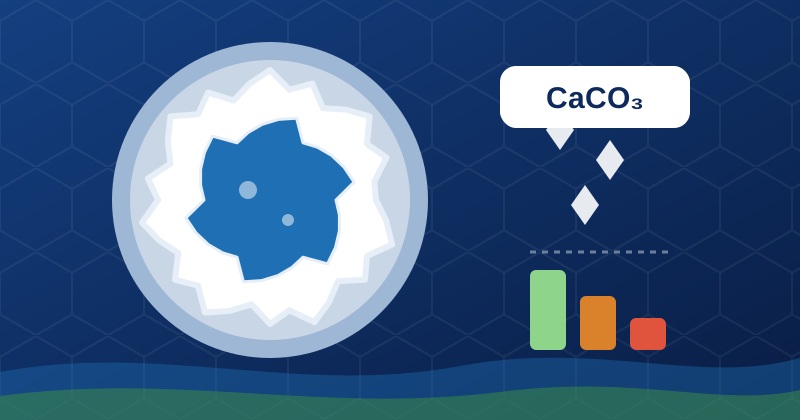
In a recirculating cooling system part of the water evaporates while the salts stay behind and build up. As the cycles of concentration (the ratio of salt content in the circulating water to that in make-up water) rise, calcium carbonate (CaCO₃) approaches its solubility limit.
Why on hot surfaces first?
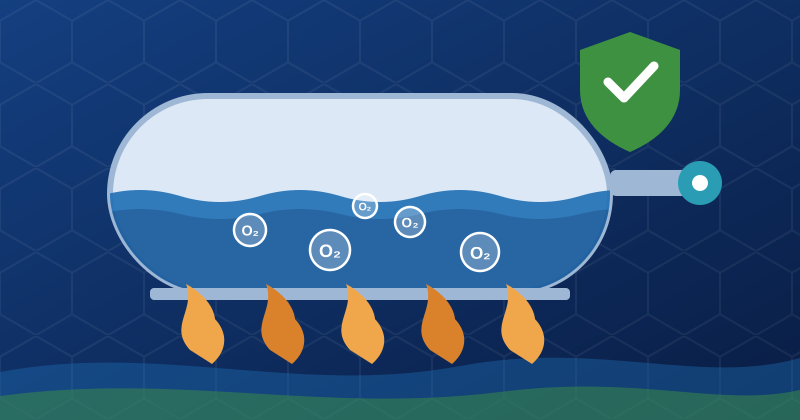
The solubility of calcium carbonate falls as temperature rises, so scale appears first on the hot surfaces of heat exchanger tubes.
What scale does
- Heat transfer drops and process temperature rises
- Energy and pumping costs increase
- Corrosion can develop under deposits
- Tubes narrow and pressure losses grow
How it is controlled
- Antiscalants and dispersants slow crystal growth and keep particles suspended
- A suitable cycles-of-concentration target and regular blowdown
- Acid dosing to lower pH and alkalinity where needed
- Regular analysis of hardness, alkalinity, pH and conductivity
The exact program depends on water composition, operating temperature and equipment materials. Send us your water analysis and we will prepare a suitable reagent program.
Have a technical specification or an inquiry?
Send a request